

My family has an eclectic food culture. We like cooking, and the twists and turns of our lives have led us to adopt dishes from around the world. A couple of years ago we chose to localize our diet and grow as much of it as possible. In some cases, that meant giving up foods we enjoy.
I am frequently amused by the quirky variations and recombinations on our table as we adapt our global repertoire to home-grown ingredients. My diet has become more interesting because the limitations of localization inspire experimentation.
But recipes are more interesting than abstraction!
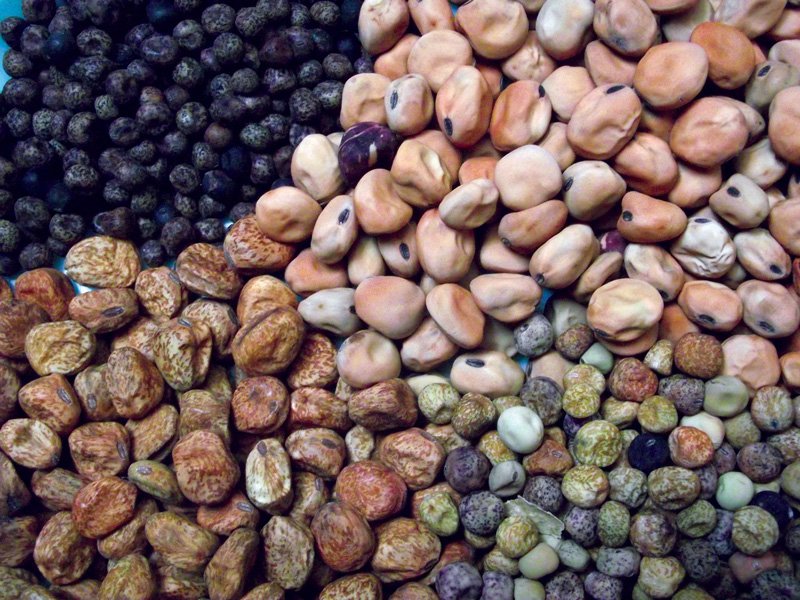
I am a great fan of dry peas. We grow many varieties which never appear in stores. When cooking, I divide them into two main types. White peas have green or yellow seeds and white flowers. They are the classic split peas which soften when cooked. Grey peas have pink flowers and large, wrinkled seeds. They hold their shape when cooked, like chickpeas, and have a similar flavour.
My dad lived in Bangladesh for a few years. As a result, we love chapatis with bhaji and daal. These South Asian staples translate really well to local ingredients.
Chapatis are flatbreads. Make a firm dough: about 4 parts flour to one part water with a bit of salt and fat. Roll out circles about 1/4 inch thick and cook on an ungreased griddle.
Daal is a sauce made from pulses. White peas work admirably. Soak them overnight and cook them to a mush (mash a bit if necessary). Add salt, minced garlic and coriander.
Bhaji is stir-fried vegetables. Our favourites are probably turnip or winter radish sautéed with salt and some butter or oil.
These three dishes make a nutritious and flavourful meal. But for more excitement, add achar! This is a salty, spicy, sour condiment. We use dried green apples, grated and dehydrated the previous fall. Rehydrate the apples with apple cider vinegar and add chopped cayenne peppers and salt (if you make it right, it should be too hot to eat much).
But there are other possibilities. In southern Sweden, people have eaten soup made from grey peas for centuries. Simple and filling, this is very different from split-pea soup because of the grey peas’ special texture. Soak them overnight and boil with salt. Once they are tender, drain and add butter and just enough milk to cover. Rewarm and it’s ready.
Pea soup and pancakes are a traditional Swedish combination. I usually do rather minimalist potato pancakes. Grate potatoes finely and add salt. Melt butter on the griddle you used for chapatis last night. Spread a layer of potato on the griddle, about the thickness of a finger, and pack it firm with a spatula. Fry until it’s brown on the bottom, then fry the other side. Voila.
And – since I like vegetables and more cultural hybridity is more fun – I sometimes round out this meal with another turnip bhaji.
Ideal Grey Bruce cuisine for our time, starting with what grows well here and recombining recipes from around the world to cook it!
Theo Wiederkehr is a subsistence farmer near Mildmay and runs Carrick Seeds, focusing on equipping gardeners with seeds for staples crops (including many dry peas!) and storage vegetables.
