

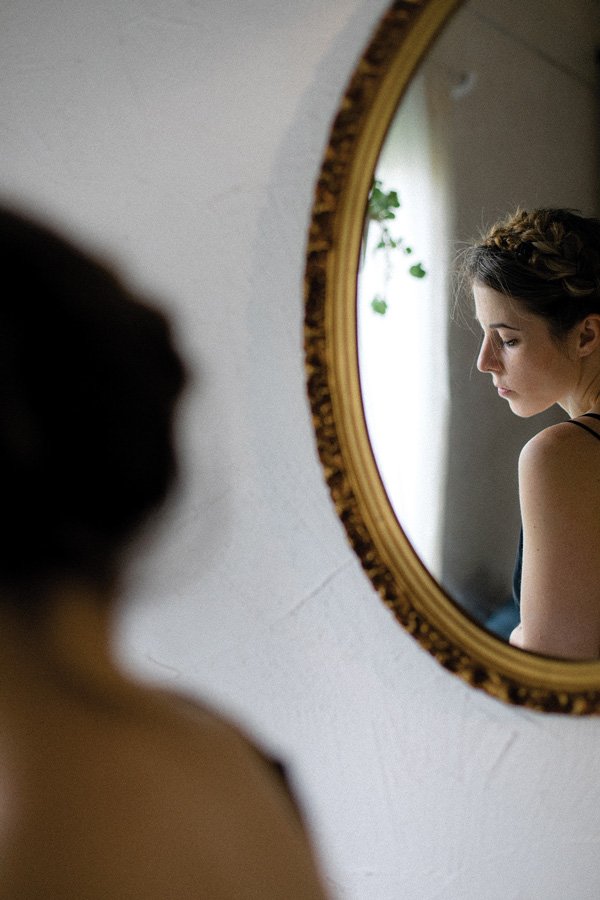
Creative blocks can be debilitating as an artist. The desire for inspiration to strike can be a siren’s song for even the most experienced artists. Sadly, that’s not how it actually works, tempting as it may seem. The work is the work and leads to inspiration – not the other way around. Building the work into a practice can often be the key to accelerating creativity.
Building a practice is exactly what Kimberley-based photographer Frances Beatty has done with her self-portrait practice. Every year in February, when her wedding and portrait photography business is at its slowest, Beatty commits to creating one self-portrait a day, culminating on the last day of the shortest month — her birthday — with 28 images mostly tucked in boxes never to be seen yet with a creative practice filled with meaning.
“I started my self-portraits in high school when I was starting out in photography,” says Beatty. “People have always interested me, but there were very few people that would sit for a photo. Especially as I was getting my feet under me and trying to understand my creative voice.”
“I started photographing myself to understand shapes and body language and composition. It was mostly me with my Olympus OM-1, a timer and a mirror trying to figure out what everything looks like.”
For years her self-portraiture remained in private with Polaroids and film photos ending up in boxes not to be seen by anyone. In the late-2010s, however, she formalized her practice into the photo-a-day month of February.
“Winter is a very slow time for me. I found myself with lots of time but not a lot of people to photograph, so I thought I’d turn the camera back on myself. At the same time, a lot of my friends were doing 365 programs, but I found I couldn’t stick to that, so I tried a more bite-sized approach: 1 photo a day, but only for a month, and the shortest month of the year.”
“Photographing myself every single day, especially while being cooped up, became something I had to think about a little bit differently — I had to start evaluating my space, the light and my inner landscape. By committing to one image a day, it forced me to create something even on the days I had no inspiration, or just didn’t feel like it.”
“Inspiration is something a lot of artists struggle with. We think that we have to wait until it strikes. This was a great way for me to force myself into a practice of shooting whether the inspiration was there or not.”
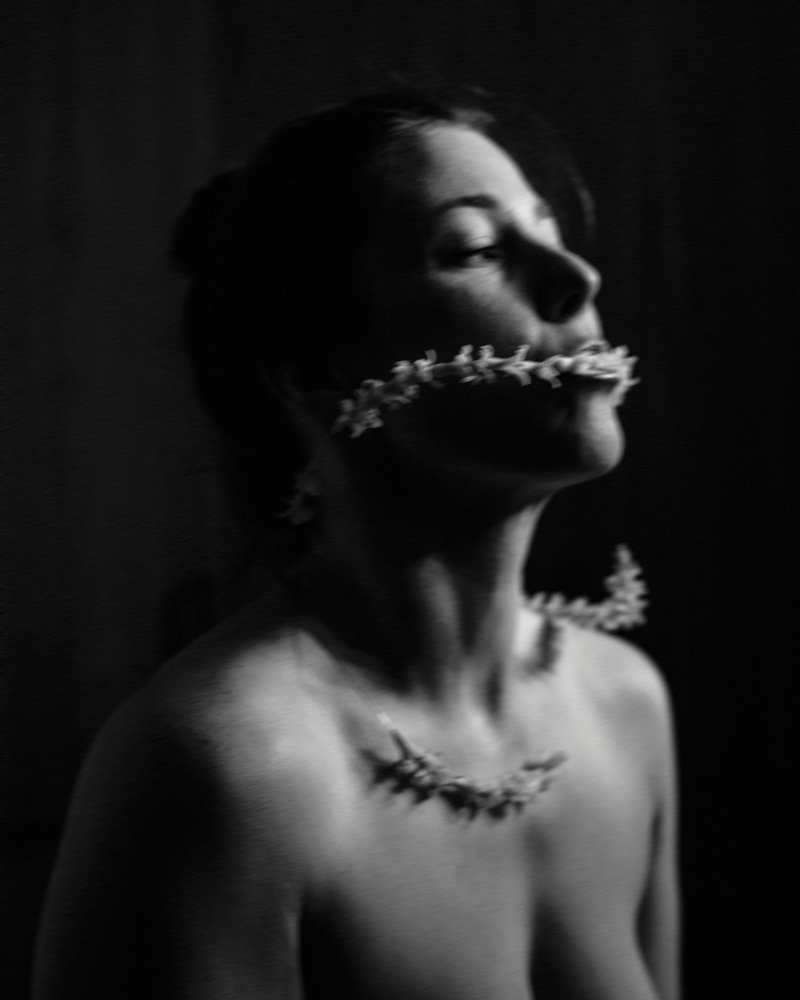
Her practice became more than a daily task as it evolved into a reflection of how she was feeling on any given day and finding inspiration.
“It became almost a therapeutic journey by forcing myself to honour where I’m at in that particular moment,” she says.
“Not focusing on making things beautiful or making something that I can present to the world. It was a pushback on the idea of selfies and everything going on Instagram and being content for people to digest.”
It was during COVID that Beatty found others in her community — both personal and professional — were struggling to find creative outlets while staying home. She discovered that sharing some of her self-portraits with others helped them become unstuck and so decided to bring others into the practice.
Initially it started as a private Instagram group, the program grew to become a place for other people — some photographers, some not — to share their work and commit to the practice, if only for February.
“I knew most of the participants which was really interesting for me. I would just encourage people to take a photo of themselves every single day. Eventually I found that part-way through everyone hits a wall, so I ended up guiding people through and realizing just how beneficial it was for them. They actually preferred having more leadership and guidance through it. So the next few times that I ran it, I created a little guide and added structure.”
“We had calls once a week to talk about struggles or things that people were learning that they really wanted to talk through, which added a whole other element I feel we’re really missing right now, especially within the creative community.”
While her leadership has helped participants, Beatty has also benefited from sharing her practice with others.
“It’s been really interesting for me. Doing this practice has been so helpful and so therapeutic. It’s been really fabulous to watch these other artists really blossom and take it as an actual challenge to force themselves into these creative moments.”
“Sometimes they’re dealing with what they have in front of them and sometimes they’re exploring an idea that they’ve had in the back of their minds for like 10 years, but have never had the opportunity to do it.”
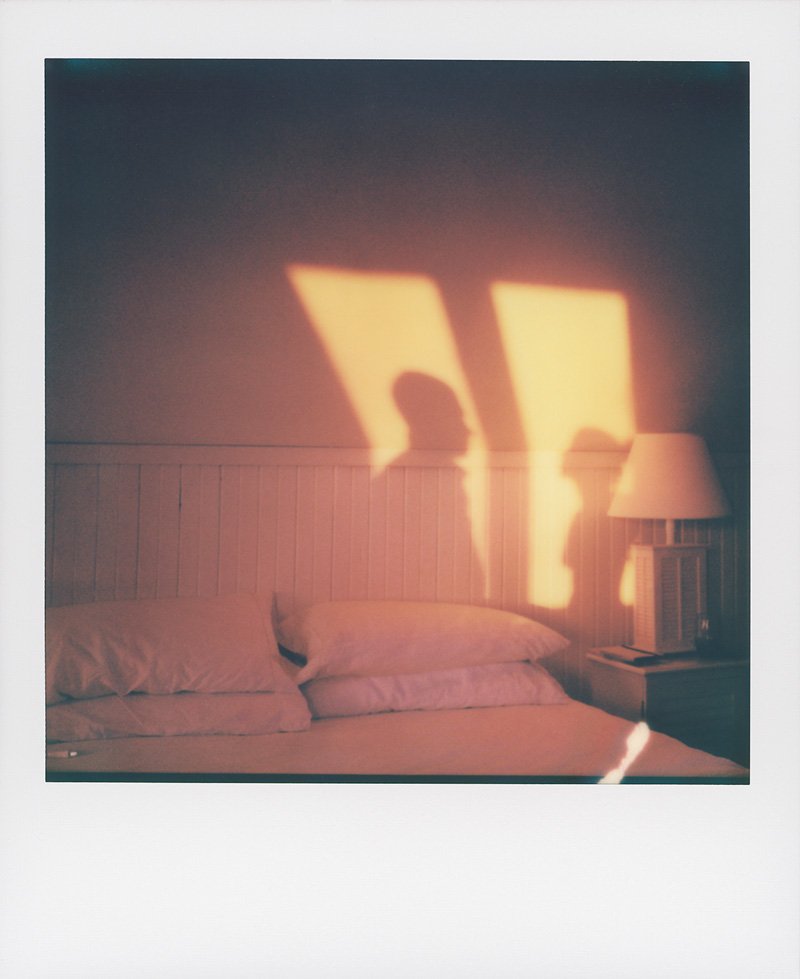
Leading the group and continuing the practice has also helped her in expanding her creativity and learning more about her own work.
“One of the other things I really encourage other people to do and tend to do myself, because I hate having my photo taken, is to find ways to push the boundary of what constitutes a self-portrait. Could it just be a limb, a shadow, an object?”
“I remind others, and myself, that the images don’t have to be for an audience. It can be debilitating sometimes, or curb your creative flow, when you’re performing for an audience. This has been a really good exercise to do for the process and for internal validation of knowing I stuck with it.”
Beatty isn’t sure if she will run the program in 2027. She thinks she may move the community portion of the program to March and keep February for her own personal practice. Regardless, the community element is what she wants to continue.
“I find the accountability aspect is really helpful for people to stick with it – knowing that they’re not alone and having people to talk to is really helpful. Some have said that they would get stuck with a project — like sewing for instance — and then they’d take a break to do their self-portrait for that day and it would unlock something for them. Which is really interesting.”
Ultimately, Beatty would love to see a gallery show put together of the best of the self-portraits created by the group. But even if that doesn’t happen, she’s happy with what the program has become.
“There’s so much that people have created I don’t get to see,” she says. “It almost excites me more than actually seeing it.”