

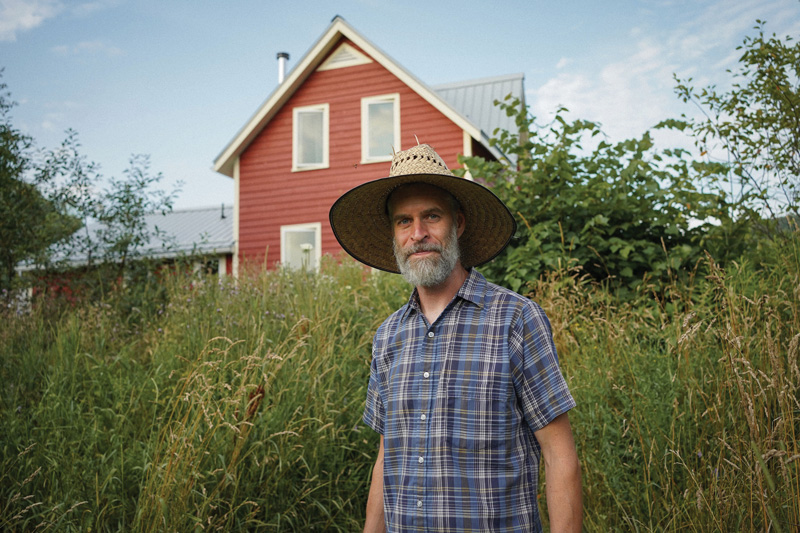
Ben Caesar is the owner and operator of Fiddlehead Nursery, a permaculture plant nursery based in Kimberley, Ontario. For the past fifteen years, Ben has focused on growing edible perennial plants and helping others design low-maintenance gardens rooted in ecological principles. What began as a personal interest in homesteading has evolved into a small, community-oriented business that encourages people to rethink how they grow and interact with food.
Ben’s path toward this life began long before the nursery took shape. As a child in Elmira, he wandered streams and swamps, drawn instinctively to the wild edges of the world. The dream of homesteading stayed with him, growing quietly until the opportunity arose to buy a small farm. Though he felt the natural uncertainty of starting a business tied so closely to the land, he trusted the pull and went for it. Looking back, he calls it one of the best decisions of his life — an act of faith that rooted him where he was meant to be.
A defining moment came in 2003, when a chance phone call from Ahren Hughes invited him to help plant a field of nut trees. The two had only known of each other through their fathers, yet that day began a lasting friendship and introduced Ben to the philosophy of permaculture. The idea that an edible landscape could mirror the balance and resilience of a natural ecosystem changed and affected him deeply. Through Ahren, Ben discovered not only a method of gardening, but a way of seeing — one where humans are participants in nature rather than separate from it.
Books and ideas have continued to shape Ben’s thinking over time. Writers such as Samuel Thayer, Martin Crawford, and Eric Toensmeier helped deepen his understanding of edible wild plants, agroforestry, and perennial agriculture. Their work offered both practical knowledge and a philosophical framework — one that envisions humans living in respectful partnership with the earth while restoring soil, storing carbon, and growing nourishing food. At Fiddlehead, these influences live on in the diversity of crops and the layered, ecological approach to cultivation.
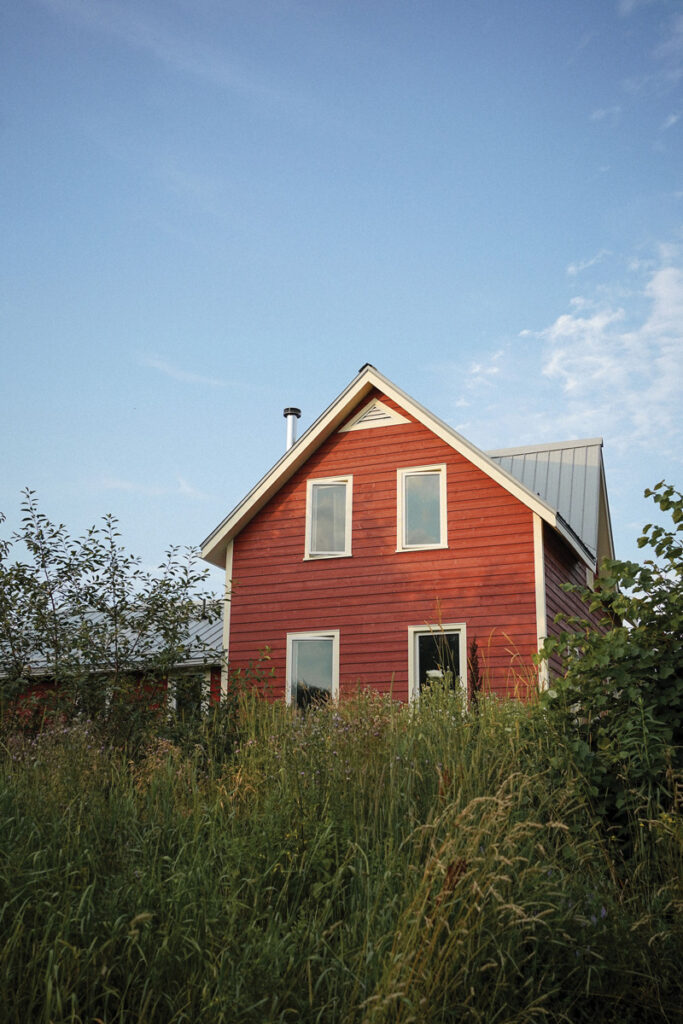
Photos by Kelsey Vansickle
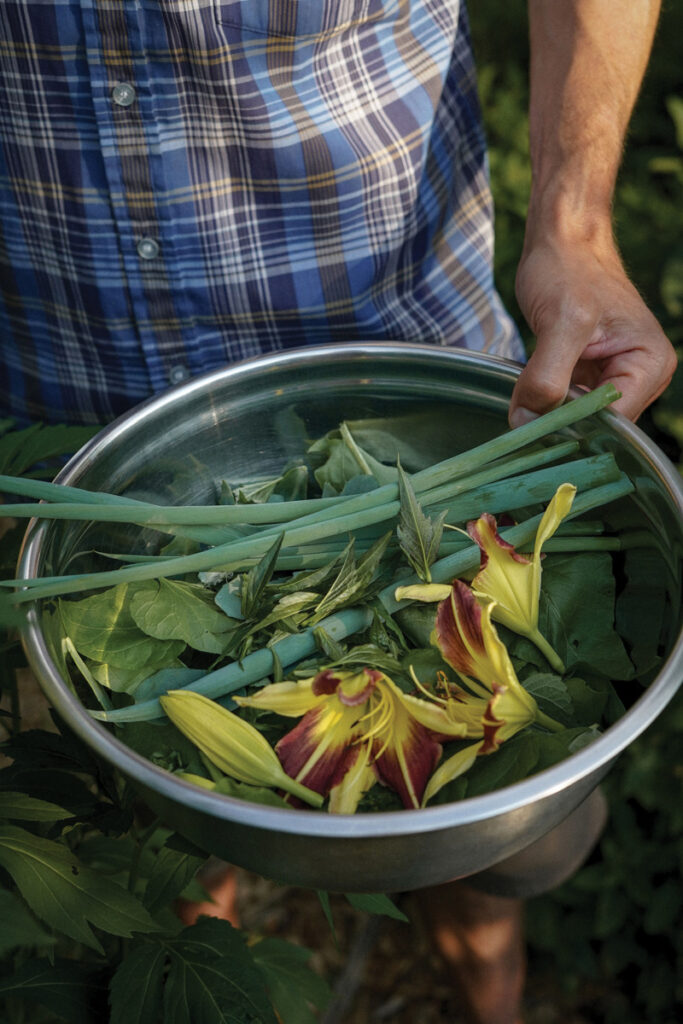
For Ben, the value of his work is measured not in scale but in impact. He takes quiet satisfaction in knowing he has helped others grow food beyond the industrial system, nurturing both environmental health and personal resilience. Perennial vegetables, he notes, often exist unnoticed in ornamental gardens; what is missing is not the plants themselves, but the knowledge of how to use them. Through his nursery, he has helped shift that awareness, inspiring gardeners to see food where they once saw only foliage.
Permaculture, in his view, is both practical and philosophical — a design system that situates humans within nature and strengthens the resilience of landscapes and communities alike. Yet he is clear-eyed about its limits.
Grassroots practices alone cannot counter the rapid destruction of ecosystems; meaningful stewardship must also involve collective action and pressure on governments to protect and restore the natural world. Care for the land, he believes, must move in both directions — from the soil beneath our feet to the policies that shape our shared future.
Fiddlehead Nursery has never been a solitary endeavour. From the beginning, Ben has welcomed volunteers from around the world through the WWOOF program, exchanging knowledge, labour, and hospitality. These helpers have become an essential part of daily life at the nursery, bringing diverse perspectives and energy. Their presence, like the plants themselves, has woven a broader sense of connection into the fabric of Fiddlehead.
Education is central to Ben’s work. Throughout the growing season, he hosts workshops on edible landscape design, teaching participants how to create low-maintenance gardens that mimic natural ecosystems while producing food and useful plants. He offers sessions on plant propagation and informal tasting tours, where visitors encounter unfamiliar vegetables and rediscover the possibilities of perennial crops. These moments — small, sensory, and shared — extend the nursery’s influence beyond its borders.
Outside the garden, Ben’s passions continue to echo his values. He hikes local trails, canoes nearby rivers, and works as a carpenter throughout the winter months, drawn to natural building and reclaimed materials.
Ben’s curiosity extends to passive solar design, literature, and the arts, as well as to community activism. As a co-founder of a local Strong Towns group and an advocate for protecting the former Talisman ski hill from development, he works toward more sustainable and thoughtful patterns of growth — on the land and in society.
When asked what advice he would offer to aspiring gardeners, his answer is simple: start small. A single currant bush, a handful of sorrel plants — these humble beginnings can build confidence and grow into something larger. Permaculture doesn’t need to begin as a forest; it can begin as a gesture, a willingness to learn from the living world.
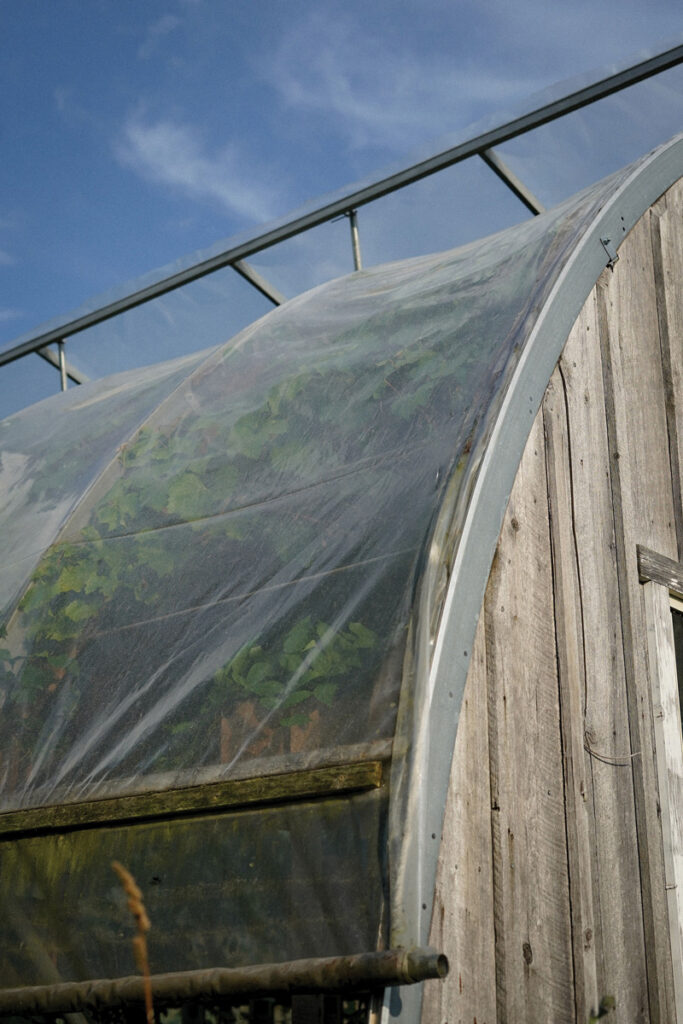
Looking back, Ben finds joy in the quiet successes — a greenhouse shaded by flourishing seedless grape vines, beauty and function intertwined. Looking forward, he feels no need to expand.
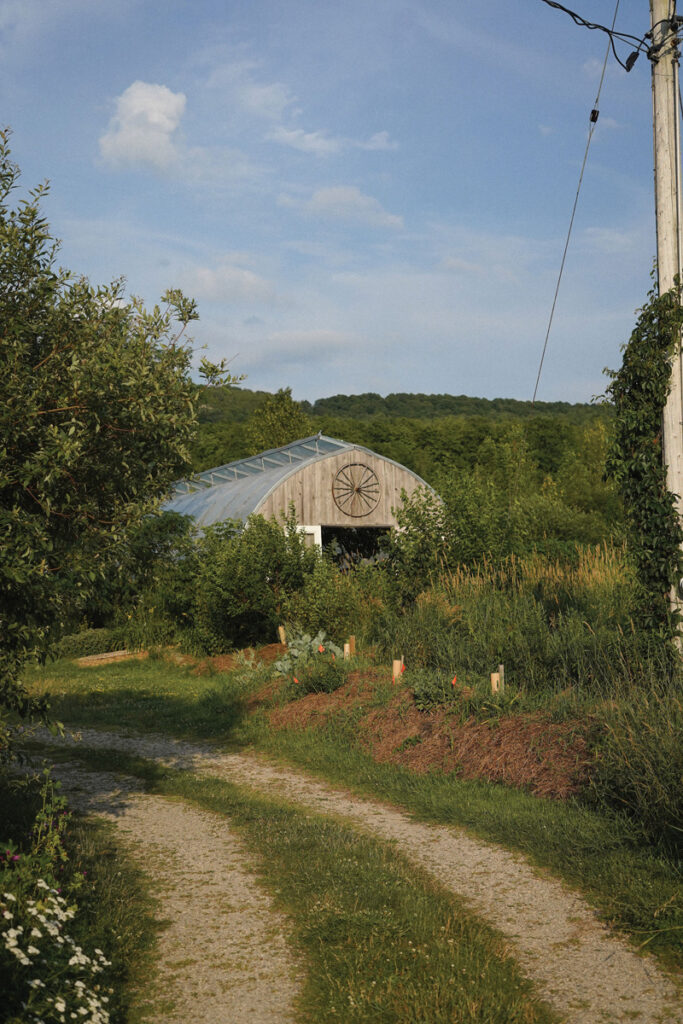
The nursery remains intentionally small, shaped to fit a modest life and a steady rhythm. What continues to drive him is curiosity: new plants to experiment with, new structures to build, and the ongoing work of tending a place where people, plants, and land meet in balance.
At Fiddlehead Nursery, growth is measured in depth — in the roots that reach further into soil, in knowledge passed from hand to hand, and in the enduring belief that living well begins with learning how to live with the earth.
Kelsey Vansickle is a Canadian photographer working on projects that explore how things are grown, made, and cared for over time. Rather than documenting for immediacy, her work functions as a form of visual preservation. Based in Grey County, Ontario, available worldwide.