

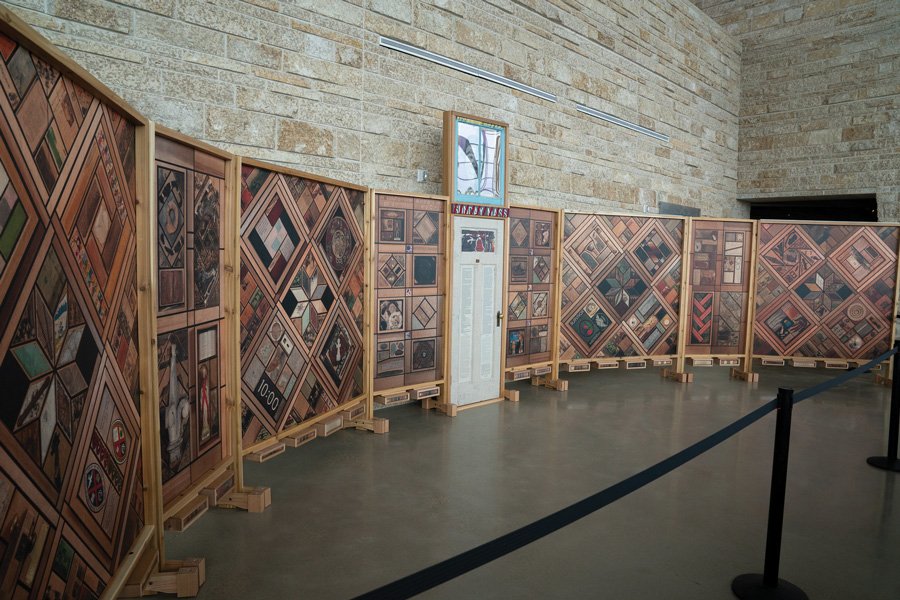
This fall the Bruce County Museum & Cultural Centre will host a replica of The Witness Blanket, one of Canada’s most powerful works of public art addressing the legacy of residential schools. Created by artist Carey Newman and presented through the Canadian Museum for Human Rights, the traveling exhibition transforms hundreds of objects into a powerful visual testimony to truth, remembrance, and resilience.
Inspired by the form of a woven blanket, The Witness Blanket incorporates hundreds of items reclaimed from residential schools, churches, government buildings, and cultural sites across Canada. Each object carries a story. Together they create a compelling visual testimony to the truths, losses, resilience, and ongoing impacts of the residential school system.
On view from mid-September through November, the exhibition invites visitors to reflect and engage with difficult histories and their continued relevance today. The presentation at the BCM&CC builds on several years of collaboration with Saugeen First Nation and Chippewas of Nawash Unceded First Nation, as well as the ongoing commitment to Indigenous-led exhibitions, programs, and community partnerships.
A key focus of this work has been connecting national narratives to local experiences. For the 2026 exhibition, interpretation will continue to expand content related to the Saugeen Ojibway Nation, helping visitors understand how broader histories intersect with the communities, lands, and stories closest to home. By grounding the exhibition in local perspectives, the museum aims to create a deeper and more meaningful visitor experience.
The exhibition will also connect with the newly developed NishTalks program, which highlights excellence in Indigenous Languages, Arts, Cultures and History. Together, these initiatives offer opportunities to engage with Indigenous knowledge, creativity and leadership while encouraging visitors to consider their own role in reconciliation.
Education will be an important part of the exhibition experience. School programming will provide teachers and students opportunities to engage with the history of residential schools through age-appropriate discussions centred on empathy, human rights, community connections, and Survivor testimony. These programs are designed to support understanding while fostering meaningful dialogue and reflection.
Community engagement will remain central to the exhibition experience. Weekly community host sessions will take place within the exhibition space, creating opportunities for visitors to ask questions, share reflections and participate in discussion. These sessions recognize that reconciliation is not a single event or program, but an ongoing practice rooted in relationships, listening, and learning.
By bringing community voices into the exhibition space, the museum aims to create a supportive environment where visitors can encounter difficult histories and leave with a stronger sense of responsibility.
Following a private exhibition opening for Saugeen Ojibway Nation community members, the exhibition will be open to the public on September 14, 2026.
The Witness Blanket is an invitation to listen to stories carried by objects, Survivors, families, and communities. Through exhibition interpretation, documentary screening, educational programming, NishTalks, community hosting and local collaboration, The Witness Blanket offers meaningful ways for visitors to reflect on truth, honour Survivors, and consider how reconciliation can inspire meaningful action towards reconciliation.