

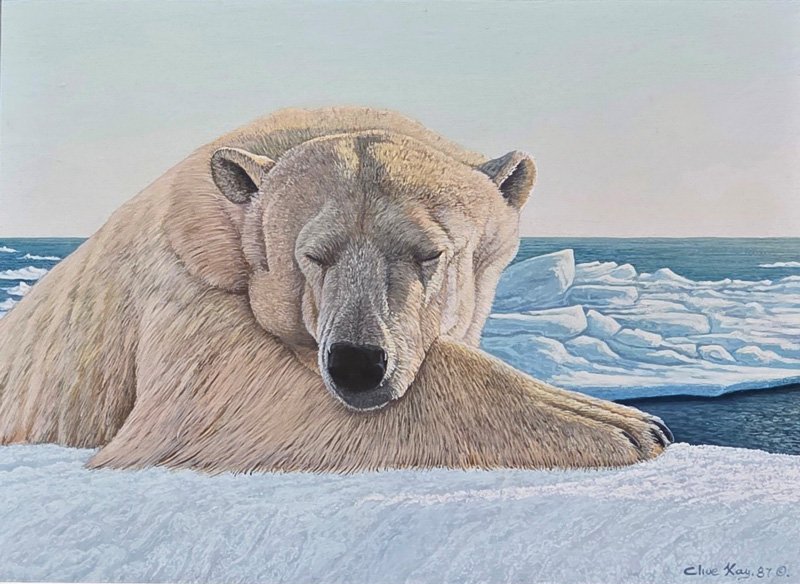
Recently over a glass of wine with a friend, I was sharing some information about a past exhibit at my gallery in Owen Sound. The subject was wildlife art, something that for me as an amateur photographer had always been a passion. I was both taken aback and discouraged to have my friend dismiss the subject of this exhibit with a superficial smile and proceed to ask me what the next exhibit would be.
In attempting to understand this dismissive reaction, I discovered that he, like several other collectors did not consider wildlife art to fit into the category of “fine art” and therefore was not something he would consider adding to his own collection. This wasn’t the first time I had encountered this kind of bias.
Why should you consider adding a piece of quality wildlife art to your collection? Wildlife art has been given a bad rap over the years. Certainly, there are examples of over production, bad copies, and poor artistic representations by mediocre artist/illustrators who have tried to capitalize on the popularity of genuine big name wildlife artists, and who have effectively reduced wildlife art to the quality of decorator prints.
However, the same could be said of many other styles and trends in the art world.
The art of copying inevitably cheapens the value of the original. We do live in a consumer society. But fine art should not, cannot and must not be consumed. Art should delight. It should inspire and aspire. It should make a statement.
When you view artwork from a position of knowledge, of selectivity, acquiring a new piece becomes a significant event. A fine piece of artwork will not only make a statement, but it will also speak to you! And you won’t feel the need for moral reassurance, to ask someone else what he/she thinks. I can only hope that the more knowledgeable and sensitive patrons will ultimately change the field of art from “survival of the fittest” to “survival of the finest”.
But then again – I am a wildlife lover – one of that naïve breed. It has been said that North America’s recent love affair with wildlife art has developed because many of the species are fading out, victims of man’s progress in a myriad of ways. Some believe that in good art lies the hope of preservation of animals and birds that in the not-too-distant future will no longer populate our skies, streams and forests.
However, if as a consumer one is educated and can distinguish between which images are merely pictures to cover empty wall space, and images which are quality representations of nature and her inhabitants, then there are many selections worthy of adding to your collection.